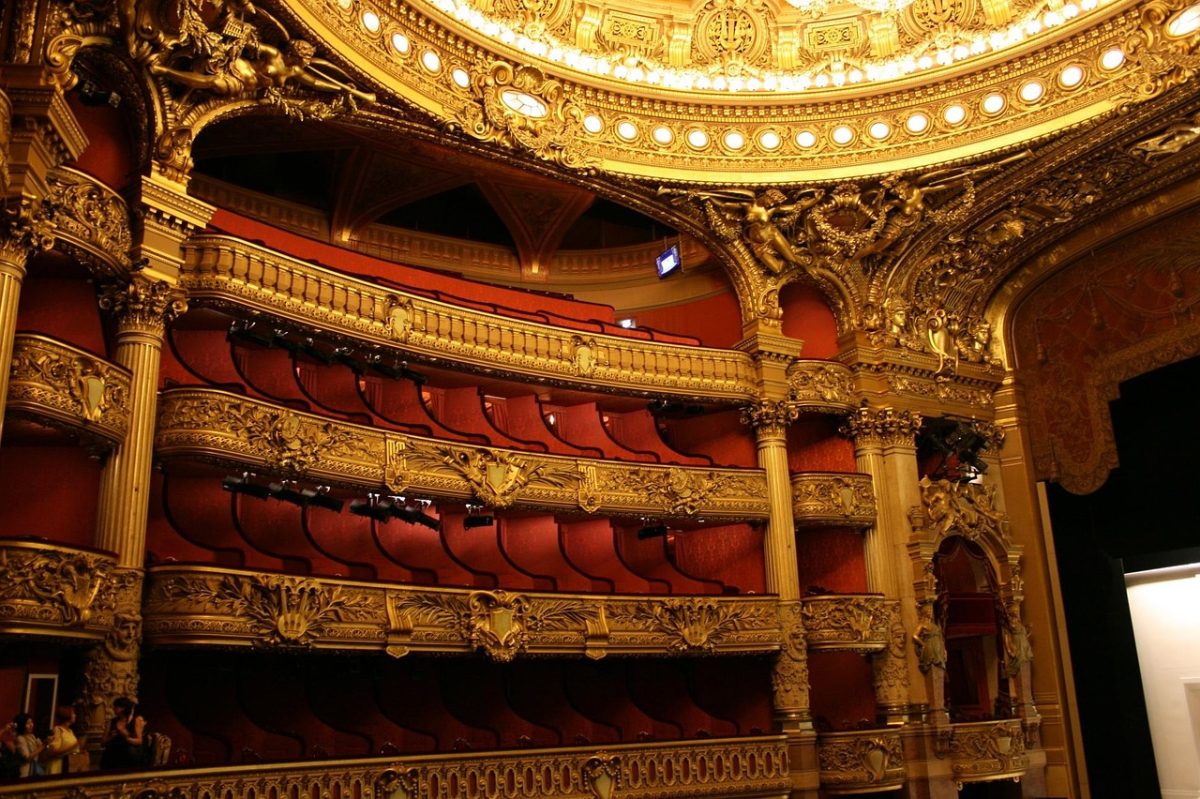
Dear readers: do not fear, for with the wonders of technology one can have musical ingenuity beamed
directly to the silver screen nearest to you. In our case, this shall be the charmingly appointed Katherine Hepburn Cultural Arts Center, where a poignant tale of love and loss in imperial Russia is soon to commence.
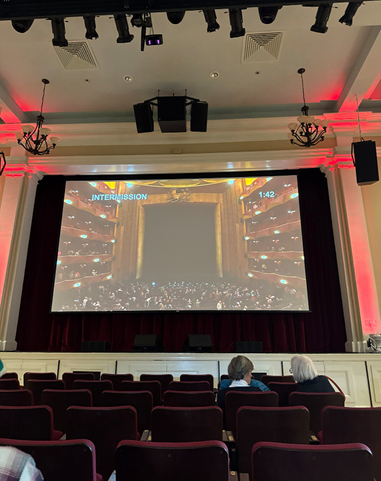
Hurry now! The violins can be heard tuning from truly symphonic stereo speakers. Tchaikovsky’s “Eugene Onegin” promises excitement, intrigue, and an abundance of passion.
Passing by the well-stocked bar (note the kettle corn; it will serve you well during intermissions), one presents their tickets and finds themselves comfortably seated amidst velvet upholstery.
And so, the show begins. A richly melodic piece epitomizing the swooning grandeur of Romanticism (note the capital), “Onegin” chronicles the dashing yet pitiless aristocrat of the same name, whose emotional iciness proves the ultimate cause of his fiery undoing.
Divided into three acts, totaling slightly more than four hours of constant musical delight, “Onegin” is, perhaps to the surprise of the uninitiated, far from taxing: rather, its rich, multidimensional harmonies and soaring arias seem to portray a realm of living far more poignant than our own; if only temporarily, one is lifted away from the chair and into the gallantry, galas, and grandeur of a world removed from our own yet fundamentally human. In a world constantly automatizing, what is needed most especially is precisely this: a voyage simultaneously away and into ourselves.
Were expressivity the criterion for greatness, opera is the most sublime form of Western performance extant. That the opera should be attended by a limited audience – to write plainly for the sake of clarity – is nevertheless easily conceivable: the opera, whilst beautiful, asks far more of the audience than the average motion picture. For film,
inaugurated in an era of distinct modernity, is bound by comparatively fewer traditions, whereas canonic opera is very much a product of heritage (linguistic, dramatic, scenic, etc.), and in that sense is rigid. Yet it is, paradoxically, these strictures which produce some of the most compelling scores known to audiences; and though The Metropolitan Opera cannot claim center stage upon the public consciousness at large, its role as foster of artistic majesty is indubitable.