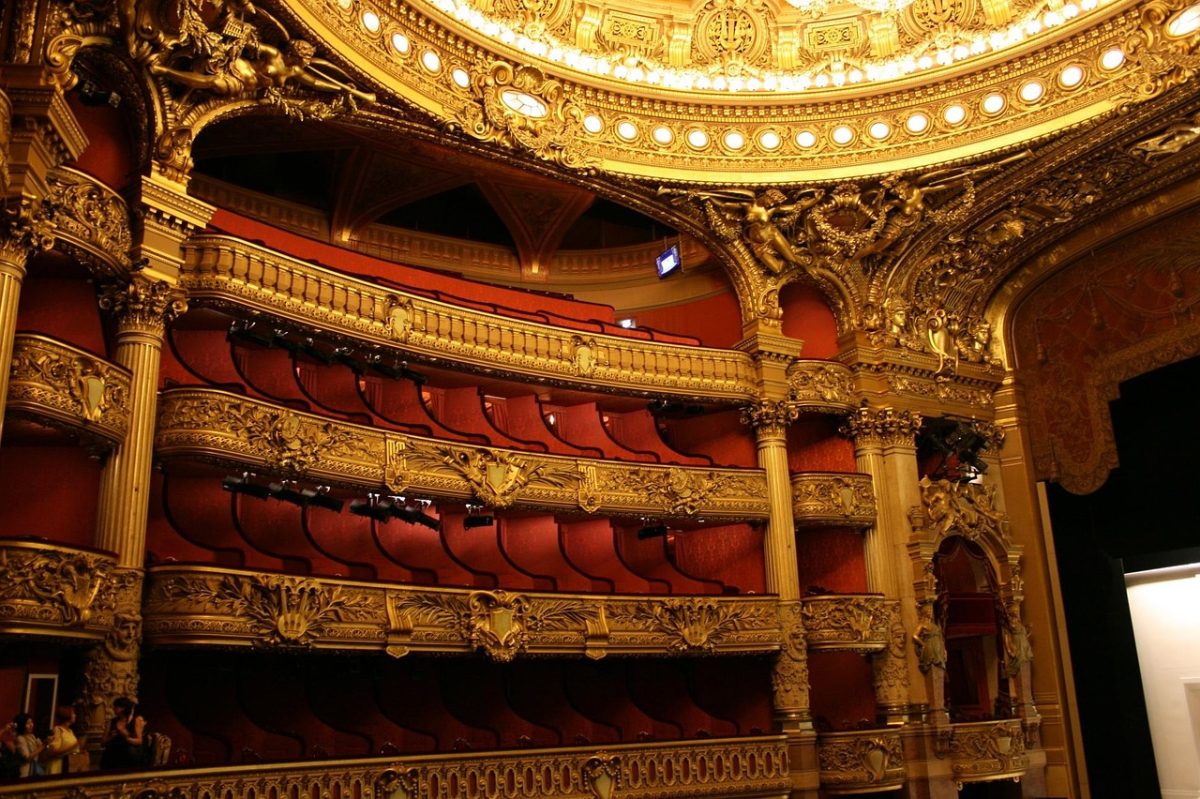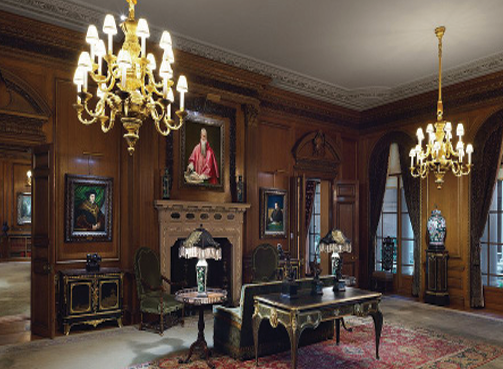
A palatial temple of the arts, enshrining the masterworks of yore – one may thus describe The Frick Collection.
I, an eager supplicant at the altar’s stone edifice, entered the lobby and found myself soon immersed amongst the reliquaries of this sanctuary consecrated to Beauty: within the Mansion’s sumptuous apartments, one may gaze upon the work of the Early Netherlandish School, whose bountiful wealth of naturalistic detail, such as Van Eyck’s treatments of drapery shall surely transfix the gaze. Observations of the latter sort occurred with frequency, a fact due not to any supposed acuity of vision but, rather, the intimacy which the Frick’s splendidly compact galleries afford. Certainly, this is an ideal manner in which great art is to be viewed: not in drab halls, coated in a sterile shade of white, but upon rich damasks whose loveliness may match that of the paintings themselves.
An additional benefit of this unparalleled collection is its sheer quality: rarely is the concentration of artistic genius so high. Both luminaries of popular renown – Rembrandt and Monet, for instance – and those celebrated chiefly in academic circles – da Fabriano and Ciambue – hang serried amongst one another. The result is nothing less than a synoptic sampling of the later Western Canon.
Generally, I find works of the late Baroque a tad saccharine, verging on cloying, in the Frick’s tastefully furnished rooms, which expand the era’s pastel palette to surrounding furniture. However, I could not help but deem spatial compositions admirable.
Similarly, the “British” room, containing works of Reynolds and his peers, is awash with a lovely shade of sage, reflecting the lush vegetation that appears to thrive invariably within Gainsborough’s oeuvre.
Those who consider themselves historians shall have much to gaze upon. Sundry nobles, depicted by such notables as Velázquez and Van Dyck, populate the Frick’s spacious halls. Naturally, some are unremarkable, yet many are far more than mere historical artifacts, displaying the work of considerable technique.
Mr. Frick was a man of considerable connoisseurship, for his tastes extended to the oft-neglected enamel, spectacular exemplars of which are displayed within the museum. Though not accorded the honors of painters, these artisans maintained the meticulous eye and deftly-wielded dexterity which thrived amongst previous generations of illuminators.
Similarly, lovely works of applied arts are scattered throughout the galleries in the form of fine porcelain and china, further beautifying and enlivening rooms. May the museum be pithily described: it is nothing short of a masterpiece.