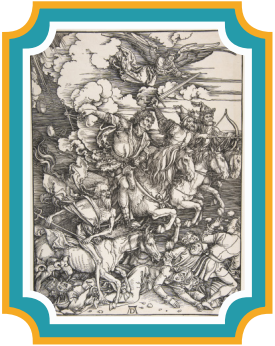
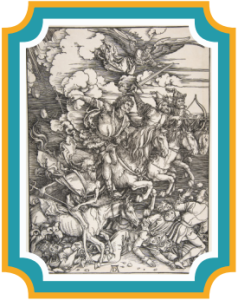
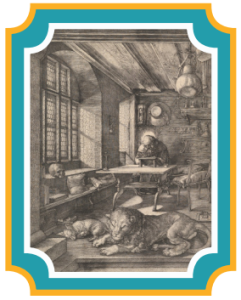
Though the name of Albrecht Dürer – born to Albrecht the Elder and Barbara Holper in Nuremberg, Germany – receives far fewer mentions than that of Michelangelo, an Italian contemporary, his fabulously executed works command no less respect. Wielding a burin, the steel tool used in the engraving of metal sheets, Dürer reigns supreme amongst fellow practitioners of his craft, some of whom are featured in the Lyman Allyn Art Museum’s fine exhibit “Albrecht Dürer: Master Prints”.
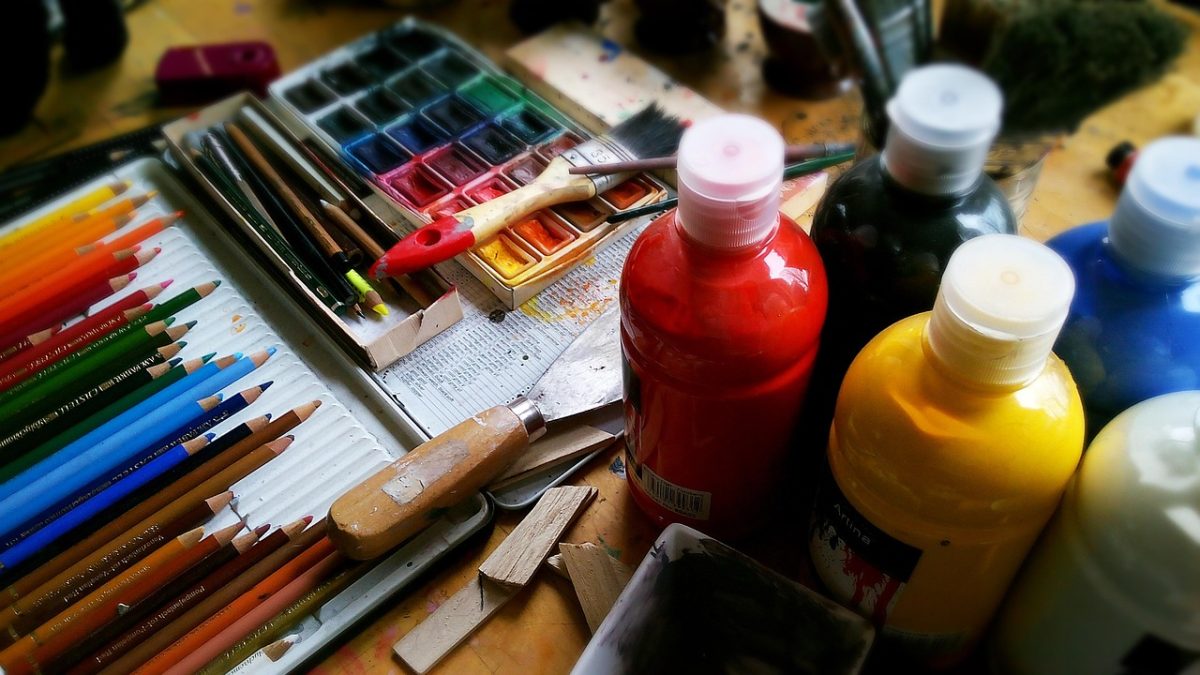
For the reader’s benefit, a few words on nomenclature are necessary: a print is a graphic reproduction of an image, which may be accomplished in a variety of methods. What follows are two such techniques (examples of both are on view).
Woodcutting involves the removal of wood surrounding an image drawn or inked upon the block. The image, therefore, is printed in the color of the ink applied to the protruding areas. Engravings, however, are produced via the cutting of minute lines into a metal sheet. As one may imagine, a considerable amount of skill is required if the engraving is to be of fine quality, for realism, in this case, depends largely upon the sheer number of incisions.
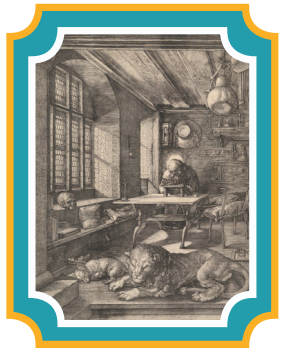
With this in mind, Dürer’s astonishing attention to detail shines particularly bright, as does the delicate light which, streaming in from a window, illuminates the subject of St. Jerome in His Study (1417). Before the learned, haloed saint, honored for his translation of the Bible into Latin, lies an unusually adorable lion, from whose paw, it is said, the kindly man removed a thorn. The seemingly endless, subtly graduated cross-hatches which compose the print enchant the viewer; one cannot help but marvel at Dürer’s technical finesse, on wonderful display within this “master print”.
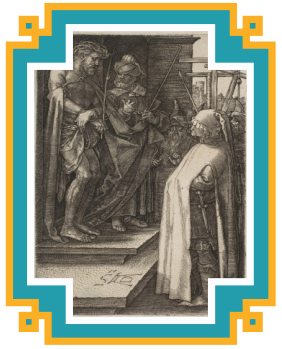
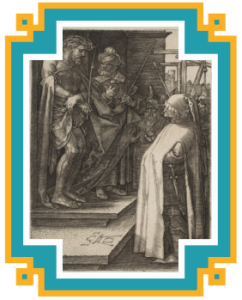
Turning to one’s left, the visitor may enter the third gallery, containing scenes from Christ’s passion. Arranged in a manner authentic to the biblical narrative, these stirring engravings are certain to move the viewer, regardless of their faith. One simply cannot help but linger at the scenes of Christ’s suffering: how pitiful he appears, topped with a prickly thorned crown, or presented to a jeering, hostile crowd! These sympathetic depictions of a poignant historical tragedy, each no larger than a postcard, are made especially moving by their graphical density, for the weeping, the wailing, is condensed; grief threatens to escape the frame.
The minute size of these prints shall likely delight, rather than disappoint. The viewer who stands before these intricate masterworks, examining the astounding concentration of potent, accurately rendered religious motifs, shall be stunned by such thoughtful craftsmanship.
Yet Dürer’s work is not mere technical showmanship; from crucifixion scenes to humorous caricatures, his work possesses an acute sense of pathos.