On a random weeknight at ELHS, a junior sits in the glow of their laptop, refreshing Infinite Campus like it is a live scoreboard. In the hallway outside of AP classrooms the next morning, students trade test scores in quick whispers before class starts, half-joking and half-terrified.
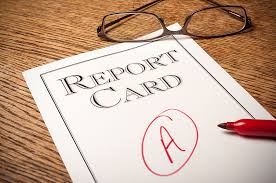
ELHS has a reputation for being a “good school,” but the competition for grades, ranks, and resumes can feel less like a friendly 5K and more like a relay that never ends. The big question behind all of the color-coded calendars and the late-night study sessions is plain and simple: Does this competition actually help students grow, or is it quietly wearing them out?
Competition shows up everywhere. It lives in weighted GPAs, class rankings, in who gets into which AP classes, varsity rosters, band solos, and the casual college talk that fills the lunchroom in the spring.
Junior Emma Frisbee describes this year in particular as “school on hard mode,” with SAT prep, AP workloads, and college planning all happening at once.
In an anonymous Google Forms survey sent out to the junior class, the majority of students agreed that they “often feel pressured to keep up with how well other students are doing,” and many said the competition makes them check grades more than they would like to.
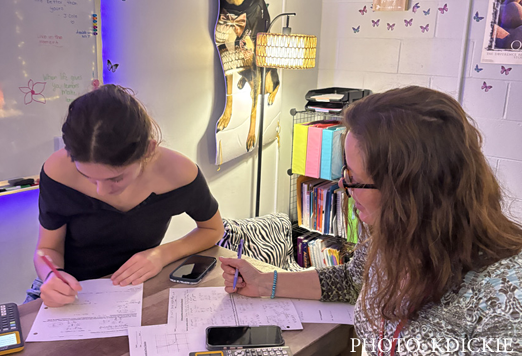
When her friends compare scores, “It’s nice to know I’m not alone if we are all struggling on something,” adding that “the competition doesn’t affect our friendship, but it does drive us all to do our best,” freshman Zoe Wallace said.
Research shows that context is often the major factor determining whether competition helps or harms. Large studies of adolescents, such as the National Library of Medicine Journal and Frontiers Journal, have found that academic pressure is strongly linked to higher levels of anxiety and depressive symptoms, especially in high achieving schools where test scores and college outcomes are a huge focus. The Summit Counseling Center labeled students in top-performing districts an “at-risk group,” for “elevated levels of chronic stress that can affect health and well-being,” noting that long hours, perfectionism, and fear of failure can add up to chronic stress levels.
Other researchers, such as News Medical and Life Sciences Journal, who study motivation, argue that when competition is framed around improvement rather than ranking, or when students are encouraged to beat their own last test instead of the person next to them, it can increase effort and build resilience. That is the perspective of some ELHS students.
Seniors have made friendly bets with classmates to encourage productivity. “As a result, we get grades that we are satisfied with,” senior RJ Zhang said, describing competition as why he still feels the pressure spike when several big tests land in the same week.
Mental-health professionals who work with teens see both sides every week. “Good stress” is short-lived, focused and supported, while “bad-stress” sticks around, “feels overwhelming, and can be hard to cope with when students feel like their whole future is riding on every grade,” local clinical social worker Jill Sandora from Tides of Mind Counseling in East Lyme said. What they say matches what national organizations have been warning: schools often focus much more on grades and test scores than on students’ emotional wellbeing, even as anxiety and depression keep going up. Students striving for top academic performance, Sandora said, are at higher risk for anxiety, burnout, and depression- especially when sleep, friendships, and time for fun start disappearing.
“I see students who are doing everything ‘right’ on paper and still feel like they’re failing. The pressure doesn’t just come from parents or teachers, but a lot of it comes from comparing themselves to each other,” ELHS counselor Christy Bryant said.