
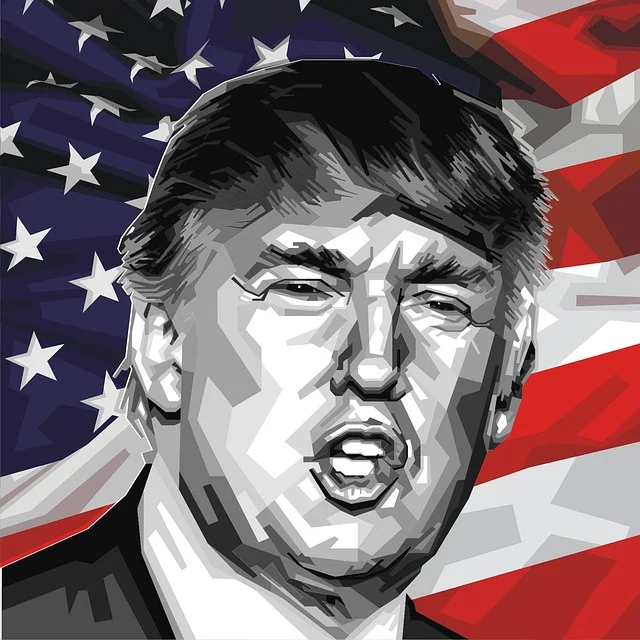
For everyone who’s worn maroon and white over the course of their high school career, college can often mean more than just the next step – it’s our chance to burst out of the protective East Lyme bubble and experience a world far bigger than the one in which we grew up. Recently, President Trump has launched an attack on the very universities that provide these opportunities, threatening to reshape what higher education means for our generation.
At ELHS, we have the privilege of receiving a top tier education surrounded by a strong support system. However, in
EL, we’re a part of a generally like-minded community. We lack the diversity that someone growing up in a big city with people of all different backgrounds experiences. Therefore, for most of us, college is a place to prepare ourselves for the future, which includes learning from people who’ve had different life experiences, broadening our understanding of the world, and expressing ourselves amongst people who may disagree. Of course, a huge part of college is about the subject matter and learning, but it’s also about having those learning experiences in a place that mimics the real world. Universities are supposed to be epicenters of free speech and diversity to allow students from all over the world to become part of a much larger community than the one that they’re used to.
President Donald Trump’s recent initiatives undermine these very purposes by trying to rid colleges of diversity, equity, and inclusion initiatives, restricting campus expression, and withdrawing funding from universities who don’t comply with his demands.
On January 29, 2025, President Trump proposed cutting funding to schools that he accuses of “radical indoctrination” and who don’t promote what he calls “patriotic education.” By doing so, President Trump is effectively trying to dictate acceptable speech on college campuses. His efforts attack the very purpose of getting a college education.
Colleges are supposed to be a place where students are encouraged to have open discussion and thoughtful debate, not places for censorship.
Recent moves – such as Texas A & M’s vote to restrict classroom discussion about race or gender ideology, sexual orientation, and gender identity unless approved by the campus president – show how easily academic freedom can erode.
Regardless of one’s beliefs, discussions about these topics shape our world today. Debate over these topics is pointless unless you’re fully informed, and there’s no better place to shape your beliefs thoughtfully than at a college campus where differing perspectives and free speech are encouraged and protected. Limiting academic freedom at the university level will therefore limit our ability to be a well informed and critically thoughtful society. Political leaders should not try to dictate what can and cannot be taught. A university that lacks diversity and restricts our ability to speak freely cannot fully prepare us for the real world.
Academic freedom is not the only concern in regards to President Trump’s recent moves. By attacking diversity, equity, and inclusion initiatives in colleges, President Trump further limits the potential of our education.
I often hear that people are thankful that President Trump is working to eliminate DEI when it comes to applying for colleges. Many students are frustrated at the thought of someone “underqualified” getting into their dream school instead of them because the “underqualified” individual is a minority. First of all, in general, colleges are not accepting students whom they feel are “underqualified” to attend their university.
The admissions process is highly subjective, and someone could be accepted or denied for a multitude of reasons. DEI initiatives aren’t pushing colleges to lower the bar when it comes to acceptances. Instead, they push universities to accept a diverse pool of students amongst the group of applicants who they deem qualified to attend that university. A push to ensure there’s diversity at every university proves a great way to ensure all students receive a full and diverse education.
Thousands of qualified students apply to every college each application cycle. I’m sure most of the applicants at every university have the numbers and resumes to get in, so including DEI initiatives in accepting students is a great way to ensure no groups are being overlooked in the process while still keeping up the academic rigor each college offers.
I understand how terrifying the college process is, as I’m going through it right now. It’s natural to hope for any sort of extra assurance that you will get into your dream school, and President Trump offers that extra comfort to students by saying he’s completely “evening the playing field.” DEI initiatives are not blocking anyone from getting into our dream school. If you are a top student and want to go to a top college, there will be a path to a top school that is right for you. Some don’t have that path available. Most students in other parts of the country and around the world don’t have the same opportunities that many ELHS students have and can therefore be overlooked in the admissions cycles. DEI initiatives work to ensure everyone has a fair shot. It’s essential for college campuses to
include people of all different backgrounds if we want to maintain the academic excellence America is known for.
Yes, it’s possible that, if you’re a part of the majority, your odds of getting into your dream school may increase slightly by eliminating diversity initiatives, but it will be at the expense of the college experience.
For those of us preparing to leave ELHS, college has always been a promise of new experiences, growth, and preparation for the real world. We cannot let fear or political pressure diminish that experience for us