When gaining a knowledge of the Iranian conflict, first you must understand Iran’s government, its values, and how it operates. Iran is a theocratic republic (a form of government where a deity is recognized as the supreme ruling authority) which is a rather unique style. The Supreme Leader (Ayatollah), holds an extremely powerful Islamic presence, has absolute authority and power over key Iran functions such as military, judiciary, and education.
Iran is the only official theocratic republic, however, other countries such as Yemen, Afghanistan, Saudi Arabia, and Vatican City operate similarly. The Ayatollah is selected by the Guardian Council, whose members are chosen by the previous Ayatollah (translation: sign of God). Understanding that the governmental cycle of power Iran has in place is intentional and Iranians have very few opportunities to voice their opinions is crucial.
There is an extremely divisive gap between Iran’s government and Iranians themselves. A 2024-25 Gamaan study reported that only 12-20 percent of Iranians supported the current Iran regime’s recent actions and values.
Iranian citizens began to protest in December of last year fighting for “fundamental change and a political system that respects human rights and dignity,” according to Amnesty International.
Iran then cut all public internet access to conceal any crimes they later committed. During protests, security forces have used unlawful force, firearms, and other prohibited weapons against protestors resulting in mass amounts of death. The New York Times estimates around 3,000 deaths during the protests, however numbers vary depending on the source.
The U.S. and Israel (one of the U.S’s most prominent allies) attacked Iran after weeks of military build up and threats from President Donald Trump February 28. The U.S. assassinated Supreme Leader Ali Khamenei. His son, Mojtaba Khamenei, has taken his place as Ayatollah. This was not supported by most Iranians, as Mojtaba Khamenei led the crackdown which killed thousands of innocent protestors earlier this year.
According to Iran’s ambassador to the United Nations, at least 175 Iranians died from a reported U.S. strike on an Iranian elementary school. 3.2 million Iranians have been displaced so far.
In response to the attack, Iran made the decision to close the Strait of Hormuz to most shipping. The Islamic Revolutionary Guard Corps (IRGC) announced official restrictions on March 4.
20 percent of the world’s oil passes through the Strait of Hormuz and is later refined and exported in places like Kuwait, Saudi Arabia, and Qatar. Saudi Arabia is now sending oil through a pipeline across the desert. IRGC has placed missiles and boarded ships along the strait.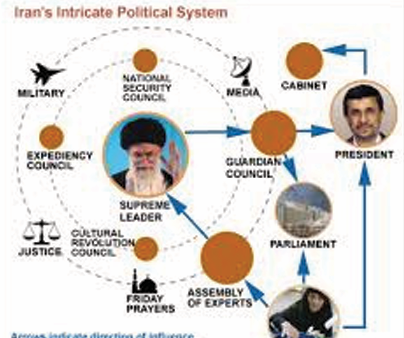
The fundamental differences between Theocratic Iranian and Democratic American societies and government are significant and play an extraordinary role in the division and tension. Additionally, past events like the 1979 Hostage Crisis have left lasting damages to our relations.
Iran’s government has historical and modern idealistics representing the idea of martyrdom, which is the voluntary suffering or death inflicted for refusing to renounce a religious faith or cause. The idea of martyrdom is not well received in the U.S.
The drastic differences between the two cultures makes for a fundamental difference in risk allotment the two nations are willing to take.