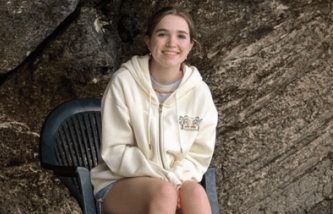
VS: Why do you believe kindergarten is one of the most important years in a child’s education?
PW: “They’re excited to come to school. I try to take that excitement and run with it. I tell myself daily how crazy it is that these little people have only been on this earth for five years. How lucky am I to be one of the first people aside from their parents to help shape them into kind and caring little people, not to mention fill their brains with as much knowledge as I can.”
VS: What skills—academic or social—do you think kindergarten sets the foundation for later success in school?
PW: “So many social skills. They just don’t come naturally for many kids. I have a mantra in my class I start it from day one and say it at three times a day: ‘Kind Words Kind Actions,’ it’s kind of my own version from Freddie Mercury’s dad’s saying to Freddie his whole life: ‘Good thoughts, Good Words, Good Deeds,’ (I loved Queen growing up, still do). Academically, I would say once they know their letters and sounds automatically without thinking about them, they’re on the road to becoming reading and writing champions.
VS: When people think kindergarten is “just play,” what do you wish they understood about what’s really happening in the classroom?
PW: “First off, I wish that people understood the power of play and everything that a child learns while playing. I then quickly tell people that I started my teaching career 36 years ago teaching first grade… and now that I have been teaching kindergarten for 25 years, I am teaching my kindergartners what I taught my first graders back then. I’m torn between how fast and how hard we are pushing these young learners, but for the most part, they are ready for the challenge.”
VS: What is something that students typically learn in kindergarten that parents might not realize is critical to their growth and development?
PW: “How to spell using their ‘Kindergarten Spelling,’ which is they spell it how it sounds. For example “tabl” for table, and “ranbow” for rainbow. I stress to parents this is our way of spelling, so please don’t spell words for your child. I tell them the reason for this is so it will eliminate spelling stress, and will help them to feel more comfortable when they begin to write more words, then sentences, then stories. It goes back to learning their letters and sounds with automaticity. And the same goes for reading. Please refrain from telling them what a word is when they read. Let them sound them out!”
VS: How do you see students grow from the beginning of the year to the end, both emotionally and academically?
PW: “This is the most rewarding part of kindergarten. I love to have them draw a picture of themself and write their name on Day One, and then doing that again at the end of the year, and the comparison speaks volumes! Communication at the beginning of the year is usually so immature, not confident, and even limited. By the end of the year they sound more like me.”
Viking Saga: What originally drew you to teaching kindergarten, and what has kept you in this grade level?
Patty Wicklund: “Actually when I was in kindergarten, I used to play teacher with my stuffed animals… particularly all my monkeys in my bedroom. My siblings were significantly older than me, so it was a nice way for me to occupy myself. Also, this is a sad reason, but while I was in kindergarten, my kindergarten teacher got into a car accident and died over Christmas break. Nobody really knew how to tell us, so they didn’t, including our parents, until we went back to school and the meanest teacher in the world was now our teacher. And she’s the one that told us. My first teacher was the kindest, sweetest teacher that always smiled. I cried every day and gave my mom the hardest time. Somehow, that experience also pushed me into wanting to be a teacher, especially for the younger kids.”
VS: Can you share a moment when you realized the impact you had on a student during their kindergarten year?
PW: “I teach likenesses and difference among people in kindergarten early in the year. I read books and have class
discussions. I had a Black boy in my class. Both his parents were white. As our sharing circle went around, we got to this particular boy and he asked me how can his skin be brown and both his parents’ skin be white. I was stumped. I didn’t really know the best way to answer that, especially on the spot with 18 other kids looking at me for that
answer. I told him what a great question, and we’ll find the answer together. I called his mom after school and told her about his question. She burst into tears. This little boy’s biological dad was Black, but the mom had no relationship with him. She started dating, and then married a man shortly after her son was born. They had always told him Jimmy was his dad. It had never occurred to her that this would ever be a question. So I worked with her, her husband and the little boy, and together, we helped his parents tell him ‘his story.’ They still reach out to me to
this day. He is around 20 years old now.”
VS: In your experience, how does kindergarten shape a child’s attitude toward school long-term?
PW: “In my opinion, it makes or breaks them. After a year in kindergarten, they’re either going to love school, or not love it. So I better do my job, and I better do it well.”
VS: How has teaching kindergarten changed or shaped you as a person?
PW: “I would like to say it helps me work on my empathy and patience for a child that is struggling when they just don’t understand something. I try to remember how my friend became very impatient with me while they were trying to teach me how to ski. That whole experience was very stressful. If I have to really dig deep, I bring myself to that time to help me remember how I felt, and I never want anyone to feel that way. Patience is truly a virtue.”