
With the rise of Asian beauty trends, food, and traditions, aspects of Asian culture have recently become popular on social media.
But here’s the problem: culture shouldn’t be taken as a trend; culture is something people live with in their everyday lives, regardless of whether or not it’s trending.
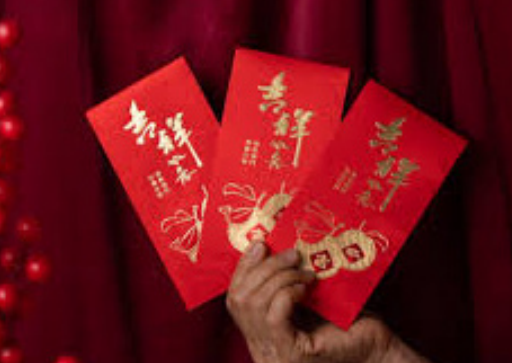
When Lunar New Year took place in February, many members of the Asian community shared pride in this holiday on social media. One tradition in particular seemed to stand out the most: the Chinese red envelope.
In this tradition, Chinese people gift their family members a red envelope filled with money. When I came across a TikTok where a Chinese girl was showing the contents of her red envelope, interestingly, the comments were filled with statements such as “I wish I was Chinese” and “that’s so lucky.” Reading those comments made me feel
frustrated. Every single comment focused on the money and not the cultural meaning behind the tradition. I also thought it was strange that people suddenly wanted to be Chinese, because last time I remember, Asian Americans were one of the most hated races in America during COVID.
Furthermore, I’ve noticed that with the emergence of culture content on social media, misinformation is easily spread. People started equating Lunar New Year with Chinese New Year, which is the incorrect term to address this holiday. Chinese New Year is a celebration originating in China celebrated by the Chinese, while Lunar New Year is celebrated in South Korea, Vietnam, Taiwan, and many more Southeast and East Asian countries. The influence of social media appears to have generalized a cultural celebration that is uniquely expressed across many Asian countries, often positioning Chinese New Year as representative of all Lunar New Year traditions.
This misinformation on social media drives cultures to lose their meaning. Traditions can become something people
simply fantasize about and are reduced to trends and aesthetics. As a result, the story behind the culture disappears. But that is where the culture lies – in the story, not just the single page.
Cultural trends are also selective and easily dismiss key aspects of a culture that are often seen as strange. For example, the demand of Korean skincare products has surged in recent years. This caused social media influencers to promote K-beauty products that will give users the “glass skin” look. While this part of Korean culture is praised, Korean music, or K-pop, remains seen as strange and unusual.
And, as quickly as one can open an envelope, suddenly, being Asian was a trend. But, when I was growing up, it was
uncommon to bring traditional Korean food to school or let alone talk about a culture everyone was foreign to.
I remember when I first brought bulgogi (an authentic Korean dish) to school. Instead of my stomach filled with a hearty meal, I was filled with shame. My classmates claimed it was smelly and looked unappetizing. Oddly enough, those feelings of fear and shame didn’t go away overnight.
To this day, I still don’t bring Korean food to school because of how deeply my childhood fear resonated with me. It’s hard to be open about a culture that I hid in order to fit in as a child. The fear lingers, even after a culture is embraced and when societal norms change. The frustration of a culture only being celebrated when it’s “trending” is knowing how easily overlooked it is.
During the COVID era, I remember when my older sister and I went to Stop & Shop to buy groceries, I was looking at
the orange juice section and received a disgusted look from another shopper nearby. So, when Asian culture started to become a trend, it seemed odd because of how fast the shift from judgement and discrimination to admiration went.
Asian culture is gaining popularity, but at what cost? Especially without any real acknowledgement of the attitudes before, it feels as if the events of discrimination that took place in the past never happened.
wish your loved ones health and protection.